
Beyond the Headlines: The Enduring Legacy of the Homestead Grays and Josh Gibson in Negro League Baseball
I. Introduction: Unearthing the Unsung Chapters
The Homestead Grays and their legendary catcher, Josh Gibson, represent monumental figures within the rich tapestry of American baseball. While their impressive championship records and prodigious individual talents are widely recognized, a deeper exploration reveals a complex and often overlooked narrative shaped by the pervasive realities of racial segregation. This report aims to illuminate the less-known aspects of the Grays’ and Gibson’s history, delving into the intricate challenges they confronted, the innovative strategies they employed for survival and success, and their profound, multifaceted impact on American society and the sport itself. Their story transcends mere athletic statistics, serving as a powerful testament to resilience, entrepreneurial spirit, and unparalleled athletic brilliance in the face of systemic injustice.
II. The Homestead Grays: A Dynasty Forged in Adversity
A. Genesis and Early Evolution (1900-1912)
The origins of the Homestead Grays are deeply embedded in the vibrant, working-class Black community of Homestead, Pennsylvania, a bustling steel-mill town situated near Pittsburgh. The team’s journey began organically in 1900 as the “Blue Ribbons,” an industrial league team formed by Black steelworkers and local men who shared a collective passion for baseball. This initial phase involved informal pick-up games against local sandlot teams, a foundational period that inadvertently laid the groundwork for a future baseball powerhouse. The team’s genesis within this industrial league highlights how Black baseball emerged from the community’s social and economic fabric, providing a crucial recreational outlet in a segregated society. This grassroots foundation fostered a strong local identity and a loyal support base, enabling the team to consistently field a roster each year, even during periods of mediocrity, which was vital for its long-term endurance.
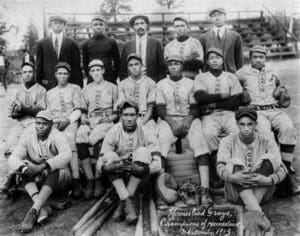
The team underwent a significant evolution, first reorganizing as the “Murdock Grays” in 1910 after the original managers retired, and then officially adopting the name “Homestead Grays” in 1912. This transformation was largely driven by Cumberland “Cum” Posey Jr., a pivotal figure whose influence on the Grays’ trajectory cannot be overstated. Born in Homestead in 1890 into one of Western Pennsylvania’s most affluent Black families, Posey was a remarkably versatile athlete who excelled in basketball, leading teams to five Colored Basketball World’s Championships, and also played football, in addition to his baseball prowess. He joined the Grays as an outfielder in 1911, quickly ascending to captain by 1916 and field manager by 1917. By 1920, Posey, in partnership with local businessman Charley Walker, purchased the club, initiating his nearly three-decade tenure as its visionary leader. Posey’s unique background, combining athletic talent with a sharp business mind and access to financial resources, was instrumental in elevating the Grays from a semi-professional weekend team to a major attraction in independent Black baseball, consistently generating “good profit every year from 1912 to 1929”. His experience in organizing championship basketball teams directly informed his strategic approach to baseball management, a level of professional foresight that was rare for the era, particularly within the constraints of segregation.
B. Navigating the Leagues and Economic Realities
The Grays’ professional journey was characterized by constant adaptation to the often-turbulent landscape of Negro League baseball. They navigated various affiliations, including extensive periods as an independent team (1912-1928, 1930-1931, 1933-1934, 1949-1950), and brief stints in the short-lived American Negro League (1929) and the East-West Negro League (1932), before finding sustained success in the Negro National League (1935-1948). The frequent collapse of these leagues, such as the American Negro League and the East-West League, underscored the inherent instability of Black professional baseball, a challenge significantly exacerbated by the Great Depression. This continuous flux in league structures forced teams like the Grays to constantly adjust their operational models, often reverting to independent status to maintain control over their schedules and maximize revenue through barnstorming. This operational flexibility was crucial for their survival and demonstrated a remarkable entrepreneurial spirit.
During the lean years of the early 1930s, the Grays faced substantial financial difficulties, which led to the temporary departure of key players, including the prodigious Josh Gibson, to the cross-town rival Pittsburgh Crawfords. The Crawfords’ owner, Gus Greenlee, a powerful “numbers kingpin” who financed his team with profits from his illegal lottery operation, represented a formidable competitor to Posey’s Grays. To counter this economic pressure and secure financial stability, Posey formed a critical partnership in 1934 with Rufus “Sonny Man” Jackson, another prominent figure in Homestead’s “numbers racket” and a local businessman. Jackson assumed the roles of the club’s president and treasurer, providing essential capital, while Posey continued to manage the day-to-day operations. This strategic alliance allowed the Grays to join the re-established Negro National League in 1934 and subsequently build the dynasty that would dominate Black baseball in the late 1930s and 1940s. This reliance on informal economies within the Black community was a common necessity, highlighting the systemic exclusion of Black businesses from mainstream financial systems.
A fundamental aspect of Negro League economics, and particularly for the Grays, was barnstorming. These exhibition games, often played against white semi-pro teams, frequently “outnumbered official league games and made more money for the Grays”. Negro League teams typically played an average of 180 games per year, a significantly higher number than Major League Baseball (MLB) teams, as a necessary measure for financial survival. This was due to the fact that player salaries, even for stars like Buck Leonard (who earned about $1,000 per month), were considerably lower than those of their white Major League counterparts, who could earn up to $80,000 annually. This extensive barnstorming also served a vital cultural and social purpose, bringing high-level professional baseball to communities across the country that had never witnessed it, thereby expanding the sport’s overall fan base and fostering a deeper connection with Black communities nationwide.
C. Dual Home City Operations: Pittsburgh and Washington, D.C.
A strategic decision that significantly shaped the Grays’ later years was the adoption of Washington, D.C., as a “home away from home” starting in 1940. This arrangement meant the Grays split their home games between Forbes Field in Pittsburgh and Griffith Stadium in Washington, D.C., the home park of the Washington Senators. This move was primarily driven by declining attendance in Pittsburgh and the recognition of Washington’s burgeoning African-American population, which presented a new, lucrative market.
Initially, the Grays encountered difficulties in drawing large crowds in D.C. during their first two seasons. A significant hurdle was the almost complete lack of coverage from the city’s daily newspapers—the Evening Star, the Post, the Times-Herald, and the Daily News—which largely ignored the team’s games. Furthermore, the absence of their biggest star, catcher Josh Gibson, who was playing for more lucrative opportunities in Latin America during this period, negatively impacted the team’s drawing power.
A pivotal turning point occurred in 1942. An exhibition game on May 31 against a white “all-star” team led by Dizzy Dean, which also featured Satchel Paige on loan from the Monarchs, drew a capacity crowd and, despite some condescending and racist coverage, received attention from all the daily newspapers, significantly boosting interest in the Grays. This momentum continued on June 18, 1942, when Paige returned with the Monarchs to play the Grays in D.C. for the first time in a night game at Griffith Stadium, which was also the first time the stadium hosted the Grays under its new lights. This event drew a standing-room-only crowd of over 28,000 fans. Although Paige initially shut out the Grays for five innings, the Grays ultimately won 2-1 in the 10th inning, leading to a surge in interest and attendance for their games at Griffith Stadium. In 1942 alone, the 11 games the Grays played in D.C. attracted a total of 127,690 fans. Attendance received another boost with an August 13 game against Paige and the Monarchs, drawing over 20,000 spectators.
Wartime gasoline rationing in 1943 further impacted operations, forcing Negro League teams to travel by rail instead of their usual team buses. This change in travel logistics led the Grays to play a remarkable 40 games on 26 dates at Griffith Stadium that season, including numerous Sunday double-headers. The convenient streetcar line in Washington facilitated fan access, contributing to the Grays drawing over 225,000 fans in D.C. in 1943, partly due to four games against Paige and the Monarchs, each attracting over 20,000 attendees. Josh Gibson’s performance at Griffith Stadium in 1943 was particularly notable, as he hit 10 or 11 home runs in 160 at-bats, surpassing the entire American League’s total of 9 home runs at the stadium that year. The Grays won 32 games at Griffith Stadium that season, including two against the Birmingham Black Barons in the Negro League World Series, which they ultimately won four games to three with one tie. This period saw the Grays famously outdraw their white counterparts, the cellar-dwelling Washington Senators, at Griffith Stadium, underscoring the strong Black fan base and the high quality of Negro League baseball.
However, the 1943 season marked the peak of the Grays’ popularity in Washington. The subsequent decline in D.C. attendance was attributed to the easing of gasoline rationing, which allowed for pleasure driving and enabled the Grays to resume using their team bus, making it easier to play games in Pittsburgh. By 1945, the Grays’ average attendance at Griffith Stadium had fallen to about 5,000, despite Washington’s Black population growing by over 50 percent during the 1940s. Games against the Monarchs continued to draw the largest crowds, particularly after Jackie Robinson joined the Monarchs in 1945, tying a Negro League record for Griffith Stadium games with seven straight hits and impressing with his base-running. After owner Cum Posey died before the 1946 season, stewardship passed to his brother, Sewald “See” Posey, and the team continued to split home games between Pittsburgh and Washington. The aging Grays posted their first losing record since joining the league, and the 1946 season was the last profitable one for the team and Josh Gibson’s final season before his death in January 1947.
D. On-Field Dominance and Legendary Players
The Homestead Grays established an unprecedented era of dominance in Negro League baseball, capturing nine consecutive Negro National League pennants from 1937 to 1945, and adding a tenth in 1948. This sustained success solidified their reputation as one of the greatest teams in baseball history, regardless of league.
Central to this dynasty were the formidable “thunder twins,” catcher Josh Gibson and first baseman Buck Leonard, whose power hitting became legendary. Their offensive prowess was a cornerstone of the Grays’ lineup. Beyond these two titans, the Grays boasted an array of future Baseball Hall of Famers, including “Cool Papa” Bell (outfield), Ray Brown (pitcher/outfielder), Oscar Charleston (outfielder/manager), Martin Dihigo (utility), Bill Foster (pitcher), Judy Johnson (third base), “Smokey” Joe Williams (ace pitcher), and Willie Wells (shortstop). Smokey Joe Williams, in particular, was renowned for his pitching dominance, once striking out an astonishing 27 batters in a 12-inning game.
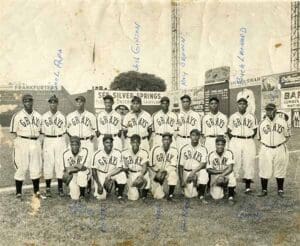
The 1931 Homestead Grays team is frequently cited by baseball historians as arguably the greatest baseball team of all time, regardless of era or league. In a year when they operated independently after the American Negro League folded, they played an extensive barnstorming schedule, achieving an estimated remarkable record of 143-29-2, a winning percentage of.828. During this legendary season, Gibson reportedly hit an estimated.390 with 40 home runs, while Oscar Charleston batted.346 with 58 doubles and 26 triples. Third baseman Jud Wilson posted an incredible.486 batting average, and outfielder Vic Harris hit.403. The pitching staff was equally dominant, featuring four 20-game winners, including Lefty Williams (23 wins), George “Chippy” Britt (21 wins), Willie Foster (20 wins), and Smokey Joe Williams (20 wins). This incredible collection of talent and their overwhelming performance against diverse competition underscores the exceptional quality of Negro League baseball.
The Grays were also central figures in some of the Negro Leagues’ most intense rivalries. Their fierce competition with the cross-town Pittsburgh Crawfords was particularly notable, intensified by Gus Greenlee’s aggressive recruitment of Grays players like Josh Gibson, Satchel Paige, and Oscar Charleston. This rivalry was a hallmark of Pittsburgh’s vibrant Black baseball scene. Another iconic confrontation occurred in the 1942 Negro League World Series, where the Grays faced the Kansas City Monarchs, featuring the legendary Satchel Paige. Despite the Grays having previously defeated Paige in exhibition games, the Monarchs swept the Grays 4-0 in the World Series. This series included memorable individual matchups, such as Paige famously striking out Gibson after intentionally walking the bases full, although contemporary news accounts suggest the taunting element of this story may be exaggerated. The series was not without controversy, as some games were later disallowed due to the Grays using unauthorized players from other NNL teams.
E. Impact of Segregation on Operations
The operational realities of Negro League teams, including the Homestead Grays, were profoundly shaped by the pervasive system of racial segregation and Jim Crow laws. These discriminatory practices created significant disadvantages across all aspects of team management and player welfare.
Travel and accommodation presented severe and often dangerous challenges for Black teams. Players were routinely denied access to essential services like gas, food, restrooms, and lodging along the nation’s highways. To navigate these hostile environments, Black travelers, including baseball teams, relied on a network of shared advice and published guides like “The Negro Motorist Green Book,” which listed establishments that served African American patrons. Despite these resources, players often endured irregular meals and were forced to sleep on buses when no safe boardinghouses for African Americans were available in certain cities.
In terms of facilities and financial disparities, the Grays, unlike their white MLB counterparts, never owned their own home field, instead relying on rental agreements for Forbes Field in Pittsburgh and Griffith Stadium in Washington, D.C.. This dependency meant they were subject to the availability and terms set by white stadium owners. Financially, the salary differences were stark; while star Negro League players like Buck Leonard earned a respectable $1,000 per month, this was a fraction of what MLB stars like Hank Greenberg ($80,000 annually) were paid in the same era. The lack of adequate record-keeping in the Negro Leagues, a consequence of operating outside the mainstream baseball establishment, further disadvantaged teams by obscuring their true economic value and historical achievements.
Media coverage also posed a significant challenge. Mainstream daily newspapers, particularly in D.C., largely ignored Negro League games, hindering broader fan engagement and recognition. While the Black press played a crucial role in covering Negro League baseball, they faced their own difficulties. As weekly publications, timely game coverage was often impossible, and they struggled to consistently report game results, standings, and player statistics. These newspapers also grappled with balancing honest reporting of the leagues’ struggles with their broader mission of supporting African American advancement into mainstream society, which sometimes led to a tension between reality and the desired narrative of success. This limited and often inconsistent media attention contributed to the “little known” nature of much of the Negro Leagues’ history.
III. Josh Gibson: The “Black Babe Ruth” and His Unfulfilled Potential
A. Early Life and Baseball Development
Joshua Gibson was born on December 21, 1911, in Buena Vista, Georgia, a small town in the racially segregated South. His early life was profoundly shaped by the pervasive racial discrimination common in the region, which made it difficult for Black families like his to thrive. In early 1924, seeking better opportunities in the industrial North, Gibson’s father relocated the family to Pittsburgh, Pennsylvania, where he found work in a steel mill.
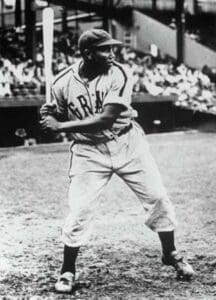
His professional career began dramatically in July 1930 during a night game at Forbes Field in Pittsburgh, where the Homestead Grays were playing the Kansas City Monarchs. When the Grays’ regular catcher sustained an injury, William “Judy” Johnson, a future Baseball Hall of Famer and the team’s coach, spotted Gibson in the stands. Knowing Gibson’s burgeoning reputation, Johnson summoned him from the crowd and asked if he would fill in as catcher. Gibson, elated by the unexpected opportunity, quickly retrieved a uniform from the clubhouse, marking the impromptu and legendary start of his professional baseball journey. This moment not only launched his own path to stardom but also underscored the informal yet effective talent scouting networks within the Negro Leagues.
B. Playing Style and On-Field Prowess
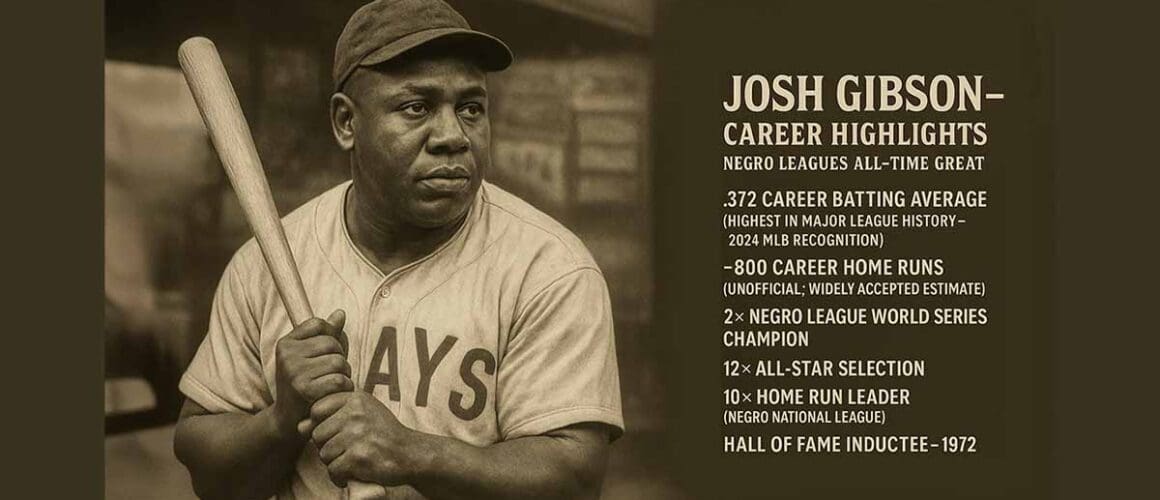
Josh Gibson’s name is synonymous with prodigious power hitting. His partnership with Buck Leonard on the Homestead Grays earned them the moniker “thunder twins,” a testament to their combined offensive might. Gibson gained legendary status during his lifetime by regularly hitting baseballs 500 feet or more, a feat that often seemed to defy physics. Anecdotal accounts, such as a 1967 story in the Sporting News, claimed one of his home runs at Yankee Stadium traveled an astonishing 580 feet, reaching the back wall of the bleachers. He is famously credited with hitting almost 800 home runs in his 17-year career, though official records for Negro League statistics were often incomplete, making precise numbers challenging to verify.
While his power at the plate was his most celebrated attribute, Gibson was far more than just a slugger. He was considered a “five-tool player” and an “excellent catcher”. His defensive skills behind the plate, including his arm strength and fielding ability, were highly regarded. It was said that when Gibson made contact with the ball, the sound of his bat “used to crack like thunder,” a unique characteristic that MLB The Show later incorporated into its game to honor his legacy.
Gibson’s statistical dominance in the Negro National League was undeniable. He led the league in home runs for ten years during his tenure with the Homestead Grays and maintained a lifetime batting average of at least.350, with no other player in the Negro Baseball League having a higher batting average and slugging percentage. The recent (2024) incorporation of Negro League statistics into MLB history has further cemented his place as a statistical leader. This comprehensive review of historical data now places Gibson as the all-time MLB leader in lifetime batting average at.372, surpassing Ty Cobb, and he would also rank first in career On-Base Plus Slugging (OPS) with a different minimum requirement. This formal recognition rectifies long-standing historical omissions and underscores the unparalleled talent that thrived within the segregated leagues.
C. The Shadow of Segregation and Unfulfilled MLB Dream
Josh Gibson’s extraordinary talent earned him the nickname “Black Babe Ruth,” a moniker that, while acknowledging his prowess, simultaneously highlighted the profound racial barrier that prevented him from playing in Major League Baseball. This comparison, often used by the media, inadvertently underscored the systemic injustice that denied Gibson and countless other Black stars the opportunity to compete at the highest level of American baseball and gain the widespread recognition they deserved.
The explicit institutional barriers to integration were painfully evident in Gibson’s career. There were rumors that he had signed with the Pittsburgh Pirates in 1943, but Major League Commissioner Kenesaw Mountain Landis, a staunch proponent of segregation, refused to allow Gibson to play. This decision epitomized the “gentleman’s agreement” that had effectively barred Black players from MLB since the late 19th century.
The impact of segregation on Black players like Gibson was profound, carrying significant psychological and economic costs. While the Negro Leagues provided a vibrant platform for their talents and fostered a strong sense of community, players were denied the ultimate recognition, financial rewards, and broader societal acceptance that came with playing in MLB. Black-owned businesses, including the Negro Leagues themselves, were collateral damage of integration, struggling to compete with white-owned businesses for Black clientele and facing a talent drain as players moved to integrated leagues. Players like Gibson and Satchel Paige deeply believed they had “earned the right to be the first players to cross baseball’s color line” and expressed bitterness when Jackie Robinson was chosen instead. This sentiment highlights the complex emotional landscape of integration, where progress for some came at a cost to the existing Black baseball infrastructure and the personal aspirations of its long-standing stars.
D. Tragic End and Posthumous Recognition
Tragically, Josh Gibson’s life was cut short. He died of a stroke on January 20, 1947, at the age of 35, just months before Jackie Robinson made his historic debut with the Brooklyn Dodgers, breaking Major League Baseball’s color barrier. This timing meant that Gibson, despite his unparalleled talent, never had the opportunity to play in the “Big Leagues” that he had so clearly dominated in the Negro Leagues.
His immense contributions to baseball were, however, eventually recognized. In 1972, Josh Gibson was posthumously inducted into the Baseball Hall of Fame, becoming the second member of the Negro Baseball League to receive this honor, following Satchel Paige. Initially, the Hall of Fame considered a “separate but equal” display for Negro League honorees, which would have denied them full membership. However, strong criticism from the press, fans, and the players themselves, particularly Satchel Paige’s insistence on full induction, led the Hall to relent and admit Negro League players on an equal basis with their Major League counterparts. This decision marked a crucial step in correcting historical injustices.
More recently, in 2024, Major League Baseball took a significant step by formally incorporating Negro League statistics into its official history. This monumental recognition officially cemented Gibson’s place as a statistical leader, including his displacement of Ty Cobb as the player with the highest lifetime batting average in MLB history. This ongoing process of historical revision and recognition ensures that the extraordinary achievements of Josh Gibson and other Negro League stars are fully acknowledged and celebrated within the broader narrative of American baseball.
IV. Conclusion: A Legacy Beyond the Diamond
The story of the Homestead Grays and Josh Gibson is a compelling testament to athletic excellence, entrepreneurial spirit, and profound resilience forged in the crucible of American segregation. From their humble beginnings as the “Blue Ribbons,” an industrial league team rooted in the Homestead steel community, the Grays evolved into one of baseball’s most dominant franchises, largely due to the visionary leadership of Cumberland “Cum” Posey. His ability to navigate the volatile economic landscape of early 20th-century Black baseball, including strategic partnerships and extensive barnstorming, allowed the Grays to thrive and build a dynasty.
On the field, the Grays were a powerhouse, particularly during their Negro National League dominance from 1937 to 1945, led by the legendary “thunder twins,” Josh Gibson and Buck Leonard. Their 1931 team, with its astounding record and array of Hall of Fame talent, stands as a strong contender for the greatest baseball team of all time. However, their triumphs were achieved against a backdrop of severe systemic discrimination, from the daily indignities of segregated travel and inadequate facilities to the stark financial disparities and limited mainstream media coverage.
Josh Gibson, often hailed as the “Black Babe Ruth,” embodied the era’s tragic paradox. His unparalleled talent and statistical dominance were confined to the Negro Leagues by the color line, denying him the opportunity to showcase his skills on MLB’s biggest stage. His untimely death just before integration underscored the immense personal cost of segregation. Yet, his posthumous induction into the Hall of Fame and the recent official recognition of Negro League statistics by MLB represent crucial steps in acknowledging his rightful place among baseball’s all-time greats.
Ultimately, the history of the Homestead Grays and Josh Gibson is not merely a chronicle of baseball; it is a powerful narrative of community building, economic ingenuity, and the enduring fight for equality within American society. Understanding their journey provides a more complete and nuanced picture of both the sport and the broader struggle for civil rights, revealing how Black athletes and entrepreneurs created a vibrant, self-sustaining world of professional baseball that entertained millions and inspired generations, even as it highlighted the profound injustices of its time.
📚 Citations & Sources
General History of the Homestead Grays:
-
National Baseball Hall of Fame:
Homestead Grays Team History -
Negro League Baseball Museum:
Team Profiles: Homestead Grays -
Seamheads Negro Leagues Database: (Verified stats and standings)
Homestead Grays Historical Records
Biography and Legacy of Josh Gibson:
-
Baseball Hall of Fame Inductee Profile:
Josh Gibson Biography -
Josh Gibson Foundation (Official):
Biography and Historical Insights -
MLB Official Announcement (May 2024):
MLB recognizes Josh Gibson as all-time batting average leader
Key Figures: Cumberland “Cum” Posey Jr.:
-
Baseball Hall of Fame Inductee Profile:
Cumberland Posey Biography -
Black Past Historical Archive:
Cumberland Posey Historical Bio
Barnstorming and Economics of Negro League Baseball:
-
Negro Leagues Baseball Museum:
Barnstorming: Traveling the Negro League Circuit -
PBS Documentary: “Shadow Ball” from Ken Burns’ Baseball:
Negro League Economics and Barnstorming
Historical Context: Segregation and Societal Impact:
-
National Museum of African American History and Culture:
The Negro Leagues and Segregation in Baseball -
Library of Congress – Civil Rights Digital Exhibit:
“Baseball, Segregation, and Civil Rights” -
Smithsonian Institution Archives:
“The Negro Motorist Green Book” and Travel Under Segregation
Media and Newspaper Coverage of Negro Leagues:
-
Chronicling America, Library of Congress:
Historical Coverage of the Negro Leagues -
Pittsburgh Courier Digital Archives: (Key Black newspaper covering Negro Leagues)
Historic Issues Covering Josh Gibson and the Grays
Statistical Resources & MLB Historical Recognition:
-
MLB.com Official Recognition Announcement:
MLB officially integrates Negro League Stats -
Seamheads Negro Leagues Database:
Verified Negro League statistics and player records
NEGRO LEAGUE COLLECTION
-
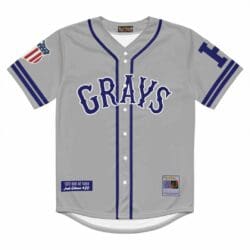
Josh Gibson Homestead Grays Jersey: Negro Leagues
Price range: $55.50 through $67.00 -
Satchel Paige Kansas City Monarchs Recycled Baseball Jersey
Price range: $55.50 through $67.00 -
Kansas City Monarchs Jackie Robinson Recycled Baseball Jersey
Price range: $55.50 through $67.00 -
Detroit Stars Negro League Replica Jersey: Blue & Red
Price range: $55.50 through $67.00 -
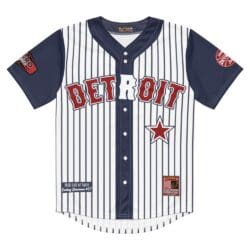
Detroit Stars Negro League Replica Jersey
Price range: $55.50 through $67.00 -
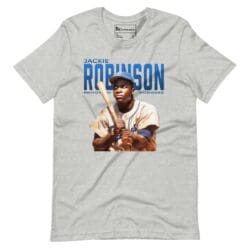
Jackie Robinson
Price range: $16.10 through $21.84